Arabic Font In Illustrator
Adobe Asian composers enable you to create content in middle-eastern and South-Asian languages. You can type in, and mix between, Arabic, Hebrew, English, and other languages.
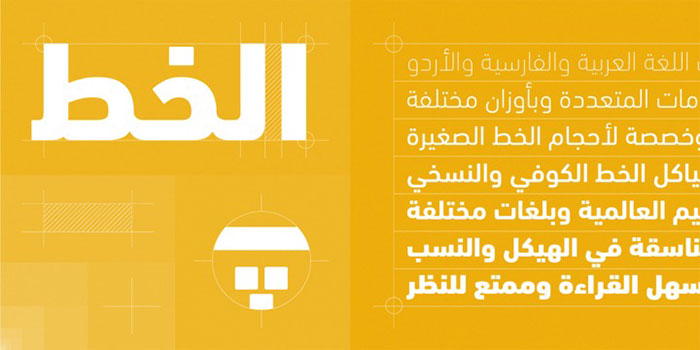
Fonts are like the outline/sketch of a painting, design comes next obviously. Today I am showcasing 50+ beautiful free Arabic calligraphy fonts of 2014. You can seek ideas and inspiration that how apt fonts would be looking so perfect having the best essence and significance in the Arabic calligraphy. Have a gaze down below at the collection. Arabic Font In Illustrator Templates Type Arabic In Illustrator Cc 2017 If you are interesting to write Arabic this is not possible for every version of Illustrator, but some to latest version of adobe illustrator are supports arabic in its original alignment. Mar 26, 2019 I am using Adobe Illustrator in Mac and Windows. In Mac I can type AXT Arabic fonts without any problem. But in windows when am typing numbers automatically changed to Adobe Arabic Font and continue as adobe Arabic Font. How can I solve this Issue. If anyone can will suggest will be appreciate.
You can choose between available composers from the Paragraph panel menu (Windows > Paragraph > panel menu). For example, you can use the Middle Eastern & South Asian Single-Line Composer or Middle Eastern & the South Asian Every-Line Composer.
For more information about other Asian languages that are supported in Illustrator, see Composer for Asian scripts.
Note:
To reveal Middle Eastern type options in the Illustrator interface, choose Preferences > Type > Show Indic Options.
You can also save your files with Arabic and Hebrew names.
To create content in Arabic and Hebrew, you can make the right-to-left (RTL) direction the default text direction. However, for documents that include left-to-right (LTR) text, you can now seamlessly switch between the two directions.
Select the paragraph direction from the Paragraph panel.
If you have a mix of languages in the same paragraph, you can specify the direction of text at a character level. Also, to insert dates or numbers, specify the direction of text at the character level.
From the Character panel menu, choose the desired character direction.
When you are working in Arabic or Hebrew, you can select the type of digits you want to use. You can choose between Arabic, Hindi, and Farsi.
By default, in Arabic, the Hindi version is auto-selected, and in case of Hebrew, the Arabic type digits are selected. However, you can switch to Arabic digits, if necessary:
- Select the digits in the text typed.
- In the Character panel (Ctrl + T), use the Digits list to select the font that the digits must appear in.
Fonts that have been traditionally used (for example, AXT fonts) can continue to be used in this release of the software. However, it is recommended that newer Open Type fonts be used for text-based elements.
Missing glyph protection is enabled by default in Illustrator. The text is handled automatically, where glyphs are not available in the font you are using. To disable this functionality, choose Preferences > Type and deselect the Enable Missing Glyph Protection option.
When you install a Middle Eastern or North African version, the default typing font is set to the installation-specific language, by default. For example, if you have installed the English/Arabic-enabled version, the default typing font is set to Adobe Arabic. Similarly, if you have installed the English/Hebrew-enabled version, the default typing font is set to Adobe Hebrew.
In Arabic, the text is justified by adding Kashidas. Nexus mac os x download. Kashidas are added to Arabic characters to lengthen them. Whitespace is not modified. Use automatic Kashida insertion to justify paragraphs of Arabic text.
Select the paragraph and from the Paragraph panel (Window > Type > Paragraph), choose a setting from the Insert Kashida drop-down list. The options available
To apply Kashidas to a group of characters, select the characters and choose Kashidas from the Character panel menu. Gta v for ppsspp ios.
You can automatically apply ligatures to character pairs in Arabic. Ligatures are typographic replacement characters for certain letter pairs if they are available in a given Open Type font.
When you choose Ligatures from the Character panel menu or Control panel menu, a standard ligature defined in the font is produced.
Arabic Font Illustrator Download
- Select text.
- Choose Window > OpenType and select Standard Ligatures from the panel menu.
However, some Open Type fonts include more ornate, optional ligatures, which can be produced when you choose Discretionary Ligatures. To apply these ligatures, choose Discretionary Ligatures from the OpenType panel menu.
You can copy text from Microsoft Word, and paste it directly into a document. The pasted text's alignment and direction is automatically set to that of the Arabic or Hebrew text.
Sentences that have more words that can fit into one line of text automatically wrap into the next line. The type of text justification when wrapping occurs sometimes causes unnecessary spaces to appear in the line that
Mixed text: The Kashida insertion feature affects how hyphenation occurs in mixed text. When enabled, Kashidas are inserted where applicable, and non-Arabic text is also hyphenated. When the Kashida feature is disabled,
Note: This functionality is disabled when you choose Arabic as the Language in the Character panel.
Hebrew text: Hyphenation is allowed. To enable hyphenation and customize settings, choose Window > Type > Paragraph > panel menu > Hyphenation.
Arabic and Hebrew users can perform
To perform text find-and-replace, choose Edit > Find And Replace.
In the Arabic script, a diacritic or a diacritical mark is a glyph used to indicate consonant length or short vowels. A diacritical mark is placed above or below the script. For better styling of text, or improved readability of certain fonts, you can control the vertical or horizontal position of diacritical marks:
- Select text that has diacritical marks
- In the Character panel, modify the position of the diacritic marks relative to the script. Values you can change are Adjust Horizontal Diacritic Position and Adjust Vertical Diacritic Position.
Arabic and Hebrew users can apply glyphs from the default character set. However, to browse, select, and apply a glyph from the default character set or a different language set, use the Glyphs panel (Type > Glyphs)
Illustrator includes support for Indic, Middle Eastern, and South East Asian languages. You can create documents using text from these languages. The additional Middle Eastern and South Asian Composer provides correct word shaping for many non-Western scripts.
Note:
Text features across Adobe applications do not necessarily have feature parity as each application can rely on different text engines. Additionally, text features can vary according to the primary usage of the application (image editing, page layout, illustration, and so on), so the preservation of formatting, style, and editability across applications can also vary according to the type treatments you choose to apply.
South Eastern Asian (SEA) languages or scriptsare not currently supported on all Adobe products. Moving SEA text from an Adobe app that currently supports SEA scripts to an application that does not support them, will likely result in a loss of some or all of the text copy, formatting, etc. In this case, note the following:
- Image files may need to be flattened before moving from Photoshop to other applications.
- Text files from Adobe Illustrator may need to be converted to outlines prior to usage in other applications.
- Text conversions may result in a loss of editability when moved from one application to another.
The Middle Eastern and South Asian composer supports the following languages:
| Indic | Middle Eastern | South East Asian |
|
|
|
Install relevant language and font packs (Windows)
To use these languages properly on Windows, you must install the language and font packs for the particular language you want to use.
For details, see Microsoft's Help documentation: Language Packs.
To create a new document using one of the supported languages:
How To Add Arabic Font In Illustrator
- Choose Edit > Preferences > Type.
- Select South East Asian Options or Show Indic Options.
- Open a document.
- Create a type layer using the Type tool.
- In the Character panel, set your Language to any of the new languages: Thai, Burmese, Lao, Sinhalese, or Khmer.
- Based on the language you select, set an appropriate font. For example, if you choose Thai language, set a Thai font such as Adobe Thai or Noto Sans Thai.
- Copy and paste text composed in the language that you choose. If you have a language-specific keyboard set-up, simply type the text.
When you enable East Asian or Indic language options, the following composers are available in the flyout menu of the Paragraph panel (available in the Control panel or through Ctrl+T):
- Middle Eastern & South Asian Single-line Composer
- Middle Eastern & South Asian Every-line Composer
Note:

In Preferences > Type, you can select only one of the Indic and East Asian options at a time. You can choose to have both options off or select one of the two.
You can select a relevant language option in the Language drop-down menu of the Character section in the Properties panel, as shown below. This option is used to check hyphenation and spelling.